Friday, 16 September 2016

Being present in your painting -1


The artist often experiences a sense of timelessness, lost time or 'flow' while working because they are completely absorbed by their activity, by the use and manipulation of materials or by the subject of their work.

Achieving this state requires a 'letting go'. Let go of your ideas that your painting will not work out. Let go of any thoughts that your work is not as good as someone else's. Let go of any ambitions about the future of your work; that should be good enough to frame; that it must be good enough to post on the internet. Let go of any fears of the imagined criticism of your peers or family. None of these things matter when you are painting - but they are preventing you from being a successful artist.

What do I mean by success? When it comes to art, the only success you can honestly measure is from within yourself. Did you enjoy the journey you traveled while painting? Are you able to criticize your work in front of your peers and honestly say what are its good points and what you could have done to make it better in your own eyes. No-one elses' opinion really matters even though we are warmed by encouraging comments and let down by silences.

I would like to help you come closer to taking complete ownership of your work and being satisfied with it for what it is. First, you must become aware of your own being and, by this, I do not mean your ego  because your ego is self serving, suggestible and vain. I am talking about becoming aware of your true being because this is the start of 'letting go'.

Here is a little exercise you can practice each time you sit down to paint, draw or go out with your camera............

Try to sense the energy in your hands. 

You cannot do this by thinking about your hands. You will feel nothing in particular. You should clear your head and simply listen to the vibrations, blood flow and sensations present in your hands. This will not be easy to do at first. If you succeed, you may feel a slight tingling of the movement of blood. Next, you might feel an energy in the tendons as if the fingers are resisting the urge to flex.

Next, you can try it with your feet for a moment or two and then try to feel both hands and feet at the same time.

Now, turn to your work, pick up your pencil, brush or camera and try to sense the life force within the elements of these inanimate objects and decide that your inner self and this instrument are now a team that are going to work together to make some marks, shape some forms or collect some light. 

I guarantee your work will go differently.


Tuesday, 29 March 2016

Intermediate water studies

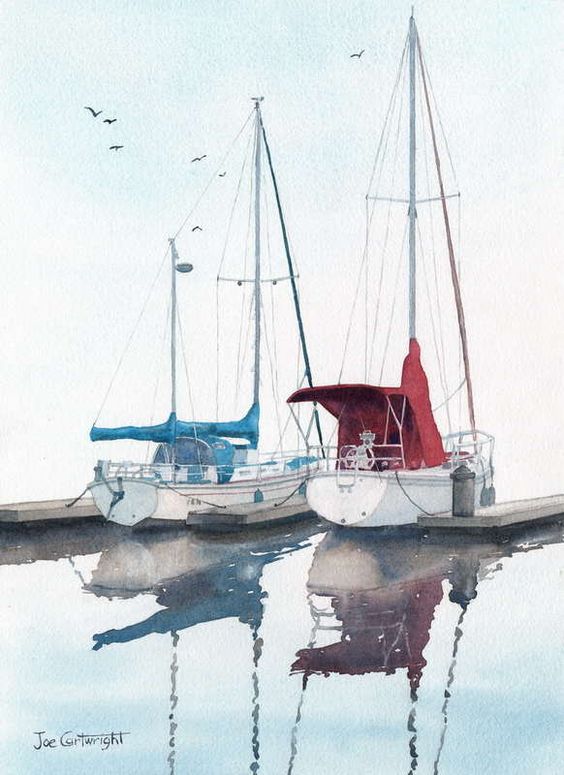
 Three different water conditions. Reflections are vertical. Reflections are always vertical. Reflections do not behave like shadows which move with the sun.
Vertical reflections of trees and the distant hill.

Vertical reflections

 Looking through the water to rocks underneath
 Reflection AND shadow in these two paintings


Friday, 11 March 2016

On Composition

We are studying still life composition at the moment and, although it is probably one of the first subjects that young artists are introduced to, they are told so very little about it. I always thought that still life was very boring. However, since becoming a professional artist, I have learned when done well, it is more challenging than the nude.

Many great minds have pitched themselves against an arrangement of pots and pans, flowers, fruit, skulls, guitars and dead animals borrowed from the butcher. Through this subject, I hope to open the door that will lead my students along the passage of painters into the wide open garden of artists. 

Theories.

Many theories on composition have been aligned with this subject. The theory of thirds (to be ignored), the golden section (always interesting), rhythm (pleasing), mirroring (mysterious) and triangulation (old fashioned but steady) to name but a few.

The golden section (sometimes called Golden Mean)


Rhythm


Front Elevation. In this stule, the object is at eye level which almost removes the need for perspective.


Unfnished story. This old painting only has three objects. The plate is empty, the cup is full, the flower is lying on the margin. 


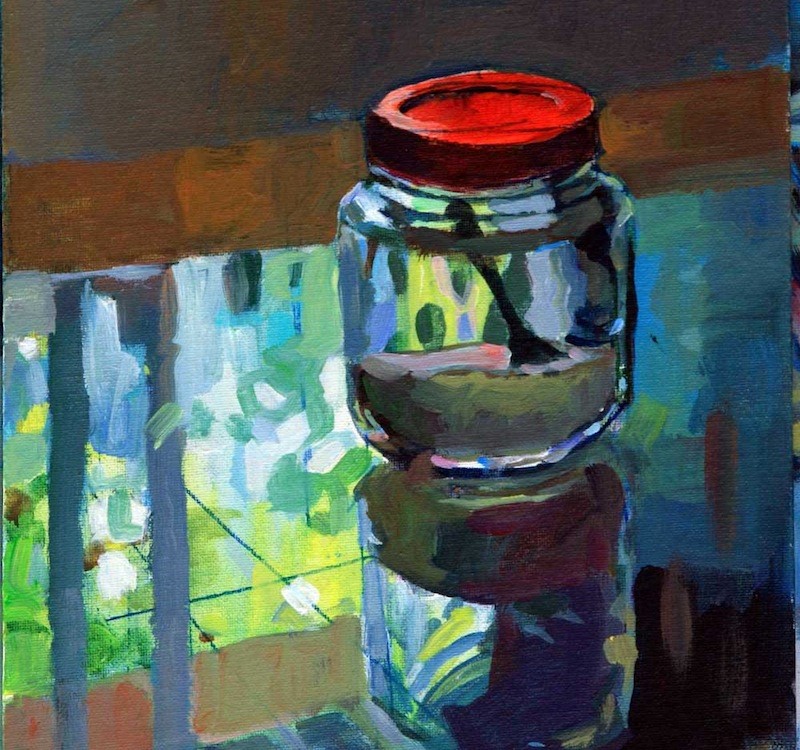
Only about the light. This painting only has one object but it is not about the object it is about light reflected on and through glass


How many triangles in this painting?


Same objects, same artist, different theory


Close up


Beyond the object


Monday, 7 December 2015

Light and shade

In today's Urban Landscape class we looked at the work of Urban Sketcher Paul Wang from Singapore.  We love your work Paul.


Tuesday, 27 October 2015

Travel sketching - a manifesto

The idea of documenting a trip through art isn’t a particularly new one. Aboard Captain Cook’s second voyage to the Pacific was oil painter William Hodges; artist Edward Adrian Wilson accompanied Robert Scott as he explored the Antarctic; even 22-year-old Jacqueline Bouvierand her sister Lee completed sketches of their European tour in 1951 (their illustrated journal is now available as One Special Summer).
Three and a half years ago, I decided to give this tradition a try. I was studying in London at the time and had booked a solo weekend trip to Porto, Portugal. Despite the fact that I hadn’t had a single art lesson in a decade, I brought a drawing pad with me, along with a set of watercolor pencils. And it was there on the edge of the Douro River, safely ensconced in a glassed-in restaurant, that I completed my first on-location travel sketch.
It was hastily drawn, with rows of capital Ls for windows and messy scribbles for trees, but I immediately noticed two effects the process had on me. As Robert Reid has noted, sketching slows you down, and helps you be present. Sitting in the same spot for hours on end in a new city was almost uncomfortable at first, but I learned such stillness has its rewards.
Candace's sketching supplies (Photograph by Candace Rose Rardon)
Candace’s sketching supplies (Photograph by Candace Rose Rardon)

The second thing I noticed was how sketching makes your whole body pay attention. I grew braver that weekend and began sketching in the open air–from park benches and riverbanks, feeling all of my senses swing into overdrive. With my camera in hand, I seem to run around recording everything while retaining next to nothing. Without a machine to do the remembering,I had to become the camera.
It was up to me to observe how the river changed colors under a setting sun, to listen to the crunch of gravel as a religious procession moved through the park on a Sunday morning, and to note how the lines of washing hung from balcony to balcony resembled strings of Christmas lights. As though my eyes were the aperture and my mind a square of film to be exposed, I was absorbing a place more deeply than I ever had before. I was living in the here and now.
Since that first trip to Porto, I haven’t visited a country without completing at least one sketch, as a means of capturing my impressions of each place.
It was only last May, though, that I discovered my sketchbook’s third gift. I was drawing on assignment in Ho Chi Minh City, and arrived at the Bến Thành night market with plans to draw an overview of the scene. I set up shop on a median, but soon realized that with two chaotic lanes of traffic between the market and me, I would have little chance of meeting anyone as I worked. So I moved across the street and resumed sketching from a plastic stool right on the bustling sidewalk outside the market.
As motorbikes blazed past and vendors grilled bananas, I felt someone looking down at me. “Excuse me,” a voice asked. “You do with watercolors?” I looked up. There stood two local college students, Há and Nhan. Há was majoring in fashion design and asked if I’d like to sketch with him. We met the next morning and ended up spending the day together: feasting on Hanoi-style phở for lunch, sketching at an artsy, out-of-the-way café, and hanging out in 30/4 Park as evening fell, the entire square filled with students playing guitars and singing. My new friends revealed layers of the city I never would have found otherwise.
Bến Thành Market in Ho Chi Minh City, Vietnam (Illustration by Candace Rose Rardon)
I realized that sketching does more than help us remember places–it opens doors and creates connections. I could write all day in my journal and no one would stop to watch or ask me what I was doing. It’s different when I have my sketchbook. There’s just something about art that encourages people to approach you, to peer over your shoulder, to look up at the subject you’re sketching and then back at your drawing to compare likenesses.
Sometimes the door is opened even wider. I’ve been invited into family homes in Bosnia, danced with union workers in a Dublin pub, and befriended young monks in Cambodia, simply because I happened to be sketching on location. These serendipitous encounters–and the global connections they engender–are now the reason I travel.
I may set out on each trip alone, but thanks to my sketchbook and watercolors, I’m never on my own for long.

How to start travel sketching: 

1. Think of the world as your studio. The beauty of sketching is how portable it is, and how any surface–from a table at an outdoor café to the desk in your hotel room–can become your work space. While all you really need is a sketchbook (look for paper sturdy enough in weight that it won’t buckle; 140lb, or 300 gsm, works well) and a pen, colored pencils or a travel-sized watercolor field kit will help bring your drawings to life.
2. See with your eyes, not with your brain. Begin by framing your sketch and choosing the perspective you’d like to capture. Our brain often jumps to conclusions; for instance, telling us a roofline slants up when it actually angles down. These mental shortcuts are natural, but should be fought against. Take the time to really study a scene, and constantly compare what you’ve drawn on the page with what’s actually in front of you.
3. Use all of your senses. Though drawing is primarily a visual exercise, flexing your other sensory muscles can deepen your engagement. What do you smell? What do you hear and which sounds stand out the most? With each observation, consider noting it on your sketch. “The air swirls with the scents of apple shisha, roasting lamb, and Turkish coffee,” I recorded while sketching in Singapore last spring. These annotations will help you create evocative mementos of the wonderful places you experience in your travels.